

Open product data for circular-economy research
R9lab documents how durable goods come apart: every component named, weighed and photographed. The records are open to browse as they are collected.
1,779 components documented, as of 14 Oct 2026
A research platform of the Institute of Environmental Sciences (CML), Leiden University
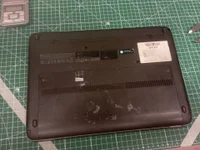
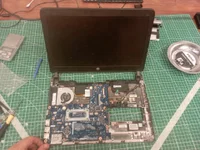 Motherboard and Screen Assembly874 g
- Charging port cable5.8 g
- Steel Bracket6.6 g
- Copper Heatsink28 g
- Plastic Frame125 g
- Screen Assembly541 g
- Cooling Fan24 g
- Speakers Assembly13 g
- Motherboard123 g
- Small Steel Bracket1.4 g
 Battery Pack227 g
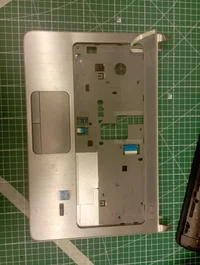 Keyboard Frame Assembly211 g
- Touch Pannel PCB9.3 g
- Small Metal Bracket1.8 g
- Touchpad Buttons Assembly13 g
- Rubber Strip0.64 g
- Sticky foil with copper layer3 g
- Conductiv tape0.13 g
- Small flex cable0.25 g
- Plastic ON button0.5 g
- Plastic Bracket0.49 g
- PCB with ethernet and USB port14 g
- Plastic buttons0.57 g
- Upper Frame Assembly148 g
- Metal Bracket17 g
- Wire Strip1.4 g
- Micro PCB with a transistor0.16 g
- On Light PCB1.3 g
- Small PCB - VL Indicator134 g
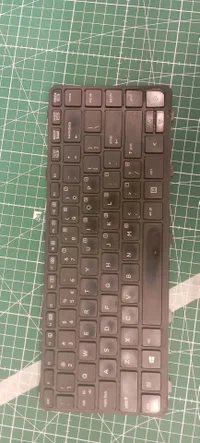 Keyboard Module97 g
- Key - Regular0.21 g
- Key - Small0.12 g
- Key - Large0.45 g
- Metal wire0.18 g
- Button mat3 g
- Keyboard plastic frame12 g
- Alumminum Frame37 g
- Keyboard Printed Foil9 g
- Plastic Key Spring0.05 g
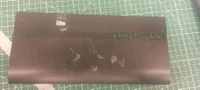 Bottom Cover Assembly63 g
- Aluminum Foil6.2 g
- Plastic Panel56 g
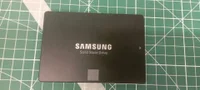 Samsung 850 EVO Solid State Hard Drive47 g
- Aluminuim Casing B87 g
- Hard Drive PCB14 g
- Aluminium Casing A23 g
Showing the 6 heaviest of 12 recorded components
Why R9lab exists
Closed, and too slow
Circular-economy research depends on detailed product data: what things are made of, how they come apart, which parts matter. That data is scarce, mostly closed, and slow to produce. Producers hold it as proprietary, and small expert teams sampling by hand cannot keep pace with what reaches the market.
Downstream, at the point of failure
So R9lab goes downstream, to the people who already open products: repairers, refurbishers, dismantlers, recyclers. They meet products at the point of failure, a vantage that captures as-failed composition, wear, and recoverability that as-designed specifications never show.
What contributors get back
Records feed the data that circular-economy research and product design rely on. Contributors will get something back as well: composition insight and sustainability metrics for the products they open. That part is coming in a later release.
From teardown to data
Every record is built the same way, in three passes: the product is taken in, each component is worked through in turn, and the finished record becomes browsable.
1Intake
Product in
A product arrives for teardown: durable goods that hand tools can open non-destructively.
Photograph
Capture first, before recording anything else, by phone or a fixed camera rig.
Register product
Create the product record: its type, brand, and model.
2For each componentrepeats
Identify
Name each component and identify what it is made of.
Weigh and measure
Record mass and dimensions for every component.
3Output
Nest into component hierarchy
Attach each component to its parent; assemblies nest to any depth.
Browse and reuse the records
The record becomes browsable in the app and over the API. Curated dataset releases are planned under CC BY 4.0; none has been published yet.
LCA and circular-economy research
Records support life-cycle assessment and circularity analysis.
A finished record says what one product is made of, how it comes apart, and how it has fared: the primary data that life-cycle assessment and material-flow analysis are built on.
Background: the nine in the mark is a nod to the 9R framework, the ten circular-economy strategies from Refuse to Recover that the project takes its cue from. See the ladder in the docs (opens in new tab).